
 Kembali
IKUTI KAMI



 20 Feb 2026
Written by Saidu Solihin, Director of Business Development and Operations of PT KBI.
Indonesia often refers to MSMEs as the backbone of the national economy. They number more than 64 million businesses and employ a large portion of the workforce. In rural areas, MSMEs are not only economic actors but also maintain social stability.
However, behind this strategic role, there is a fundamental question that we rarely ask honestly: is the financing system we have built truly capable of elevating MSMEs?
For the past two decades, Indonesian financial inclusion has been synonymous with credit expansion. Various financing programs, interest subsidies, and even micro-enterprise loans (KUR) have helped businesses survive amidst economic pressures. We should appreciate these achievements.
However, credit, no matter how large, remains debt.
Debt provides liquidity, but does not automatically increase ownership. Debt keeps businesses afloat, but it does not necessarily change their bargaining position in the value chain. Many village businesses still sell commodities at low prices due to cash flow needs. They remain price takers, not price setters.
This is where we need to shift our perspective: from debt-based inclusion to ownership-based inclusion.
Austrian economist Joseph Schumpeter once asserted that economic growth stems from financing innovation. A healthy financial system not only disburses credit but also directs capital to expand productive capacity.
Ross Levine's research also shows that the quality of financial intermediation—not simply the volume of credit—drives long-term growth. This means the question is no longer how much lending is disbursed, but whether the financing truly strengthens the business structure.
For Indonesia's rural economy, the challenge lies not only in access to funds but also in the structure of added value.
Farmers and commodity-based MSMEs often face price volatility. During peak harvests, prices fall. Lacking adequate storage facilities and access to financing, they are forced to sell at low prices.
However, with the right system, commodities can be treated as financial assets. Through a warehouse receipt system under the supervision of the Commodity Futures Trading Regulatory Agency (BJB), businesses can store commodities in standardized warehouses and obtain receipts that can be used as collateral for financing.
This concept is simple, but the implications are profound: commodities are no longer just commodities, but financial instruments.
However, commodity-based financing alone is not enough to drive sustainable class advancement. We also need to open access to equity.
Indonesia has a rapidly growing capital market through the Indonesia Stock Exchange. The number of domestic investors has increased significantly in recent years. This represents tremendous social and financial capital.
Unfortunately, most MSMEs still lack access to capital markets. Stock listing requirements are designed for medium-sized and large-sized companies with established governance. As a result, a gap exists: MSMEs are too large to rely solely on microcredit, but not yet large enough to enter the stock exchange's main board.
Some countries provide special pathways for growing companies. China, for example, established the Beijing Stock Exchange as a platform for innovative small and medium-sized companies before they can be elevated to the main board.
Indonesia could learn from this gradual approach.
The idea of establishing an MSME Exchange—a semi-autonomous entity integrated with the IDX—is worth considering. This exchange could be designed with more proportionate requirements, accompanied by governance support over several years, and a mechanism for migration to the main board.
The goal is not to fragment liquidity, but to provide a clear evolutionary path.
When integrated with a warehouse receipt system, the ecosystem becomes complete: villages produce, commodities are stored and financed, businesses grow, and then gain access to equity capital (not debt) through the SME exchange. Within a few years, mature companies can rise to the top of the market.
This isn't just financing. It's a design for upgrading.
Economist Mariana Mazzucato reminds us that the state must act as a market shaper, not just fix market failures. In the context of village financing, simply expanding credit is not enough; we need to design an architecture that enables structural transformation.
At the national level, Sumitro Djojohadikusumo's thinking emphasizes the importance of building an economic structure that strengthens domestic production. Access to equity for village MSMEs is part of the effort to strengthen that structure.
Of course, such reforms carry risks. Liquidity fragmentation, weak governance, or excessive speculation must be anticipated. Therefore, implementation must be gradual, with strict oversight, investor education, and a system of issuer mentoring.
However, there's no reason to stop innovating.
If 1,000 MSMEs can raise an average of IDR 25 billion in five years, the potential capital mobilization reaches IDR 25 trillion. The economic impact could be multiplied through multiplier effects on production, employment, and taxes.
Beyond these figures, what we are building is a shift in mentality: from dependence on debt to participation in ownership.
Democratizing capital means opening up access to ownership for economic growth. Villages are not just producers of raw materials, but owners of shares, owners of added value, and owners of their economic future.
We have successfully expanded the first stage of financial inclusion—access to accounts and credit. The next stage is ownership inclusion.
The question now is no longer whether we can disburse more credit, but whether we have the courage to redesign the system so that villages become the primary subjects of national growth.
Villages don't need pity.
Villages need a system that enables them to become owners of growth.
And that system can only be realized if we have the courage to move from microcredit to capital democratization.



PT Kliring Berjangka Indonesia (PT KBI) is establishing itself as part of the country's economic growth agent

PT Kliring Berjangka Indonesia (PT KBI) has started a new step in implementing the CSR program

PT Kliring Berjangka Indonesia (PT KBI) has held an inauguration for their new office at Menara Danareksa
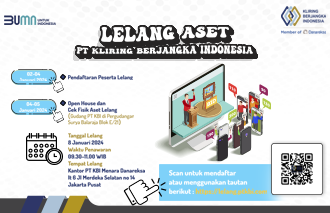
Asset Auction
Asset Auction
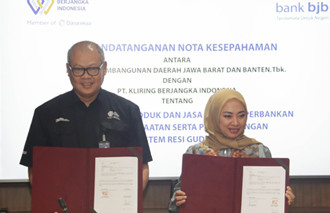
Langkah Strategis PT KBI dan Bank BJB untuk perkuat Sistem Resi Gudang Indonesia
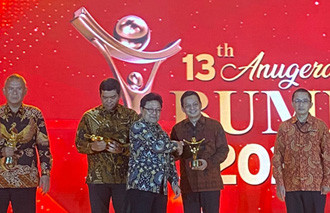
KBI Achieve the "Best Corporate in Establishing The AKHLAK Implementation Index" Award at the 2024 BUMN Awards

KBI Ramadan Media Gathering Moving into Action for Better

KBI participated in organizing Mudik Asyik Bersama BUMN in 2024
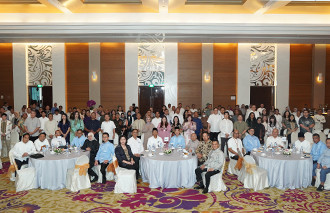
PT KBI and JFX held a Halal Bihalal event with futures trading industry
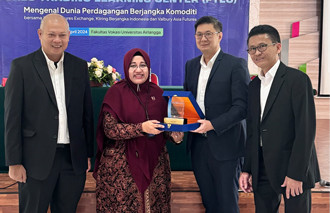
Universitas Airlangga FTLC Program with PT Valbury, JFX and KBI

KBI Cooperates with BRI (BBRI) as Margin Fund Depository Bank
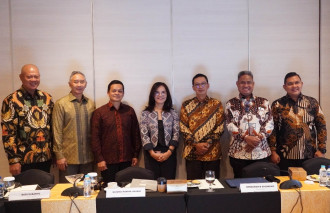
PT Kliring Berjangka Indonesia Achieves idAA Stable Outlook Rating On Operational Performance in 2023

PT KBI Wins Gold Award in Economic Pillar Category at TJSL & CSR Award 2024

PT KBI wins the 5th Anniversary Indonesia Popular Reputation Awards 2024

Supporting the government's Food Security program, PT KBI and PT JIEP developed a Warehouse Receipt System.
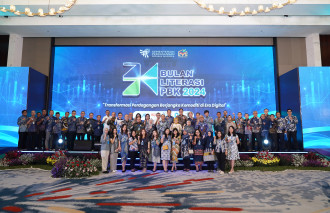
PT KBI supports PBK Literacy Month, focusing on digital transformation and strengthening synergy in the commodity future
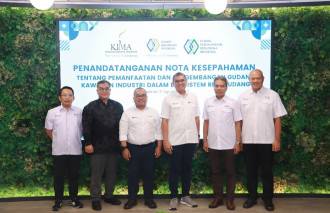
PT KBI and PT KIMA collaborate to develop industrial area warehouse as a strategic step to strengthen the company
PT KBI strengthens Indonesia's food security by developing a Commodity Trading Ecosystem through synergy and system tran
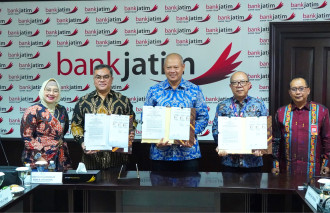
Collaboration between PT KBI, PT KPBI, and Bank Jatim Develops Warehouse Receipt
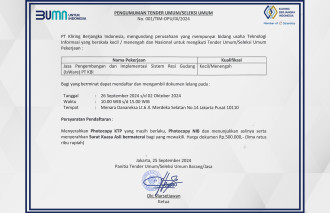
PT Kliring Berjangka Indonesia Mengadakan Tender Umum

PT KBI Holds KBI 5th ESport Championship Again

KBI's Role in Futures Trading Ecosystem
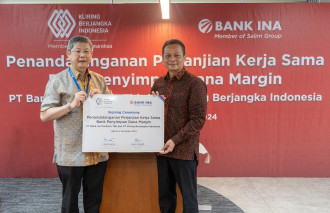
PT KBI Collaborates with Bank INA as BPDM
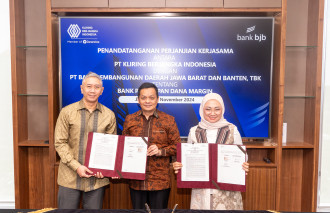
PT KBI Partners with Bank BJB to Strengthen Commodity Trading Ecosystem
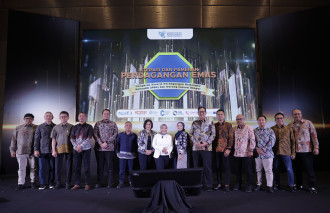
PT KBI is Optimist to Strengthen Physical Digital Gold Trading in 2025
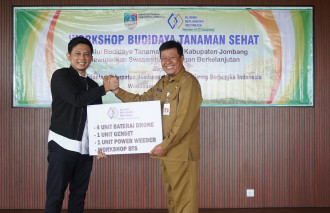
PT KBI Strengthens National Food Security Program Through Optimization of Rice Barns in Jombang, East Java
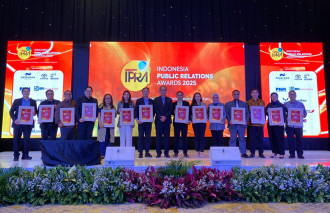
PT KBI wins prestigious award for Best Public Relations in the Financial Services category

PT KBI once again received a prestigious award in digital innovation at the 6th Indonesia Top Digital Innovation Award
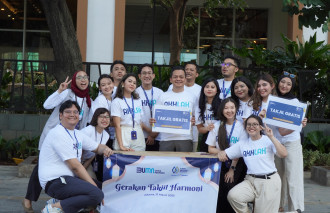
In the spirit of the holy month of Ramadan, PT KBI encourages spreading kindness through Ramadan Bergerak campaign
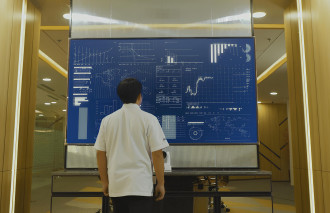
KBI recorded a surge in strategic commodity transaction volumes amid geopolitical and economic uncertainty.
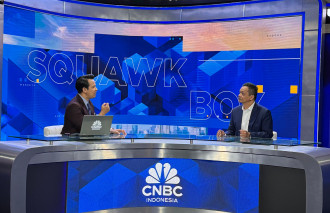
Global economic uncertainty caused by geopolitical tensions and trade wars has led to a shift in investment to gold, whi

It is not just about cultivating commodities, but this issue has deep links to issues of sustainability
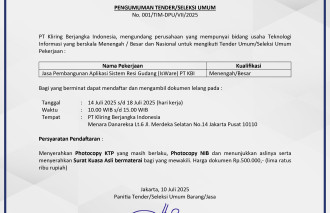
Pengumuman Tender Umum/Seleksi Umum Untuk Perusahaan IT
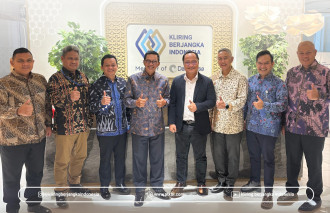
A country with vast agribusiness and logistics potential, Indonesia requires a transparent & reliable warehouse system
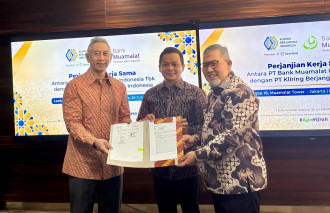
Bank Muamalat collaborates with KBI in the use of banking services for transaction settlement
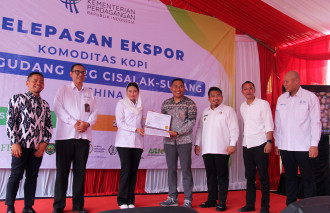
PT KBI as the only Warehouse Receipt Registration Center in Indonesia

PT KBI Received the 50 Popular PR Person Award of 2025 at The Iconomics event
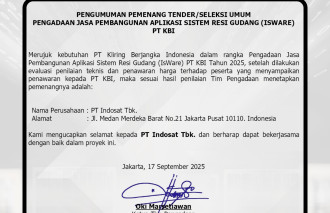
Pengumuman pemenang tender umum pengadaan jasa pembangunan aplikasi sistem resi gudang (ISWARE) PT KBI
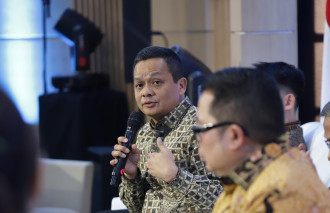
The Golden Generation with CFTC Skills: Understand Risks and Opportunities
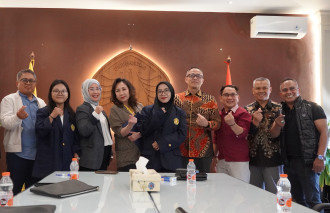
Scholarship program for undergraduate students
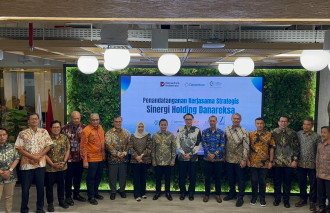
Realizing Industrial Estate Warehouse Integration and Warehouse Receipt
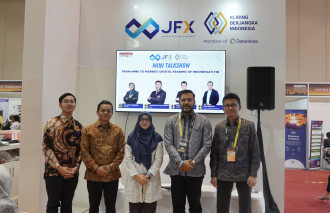
Strengthening Governance and Competitiveness of Commodity Trade
Warehouse Receipt Ecosystem Synergy at Trade Expo Indonesia 2025
JFX and KBI Synergy in Commodity Trading Mining
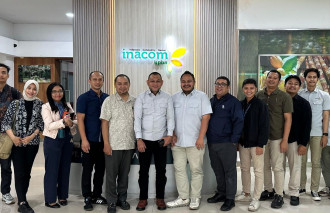
PT KBI Promotes Auction of 20 Tons of Coffee Runs Successfully

KBI Expands Role until US Stock Exchanges
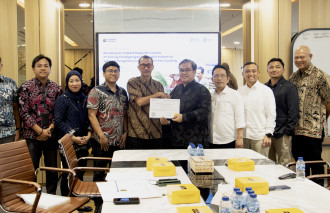
PT KPBI is granted liscense as Warehouse Manager by BAPPEBTI
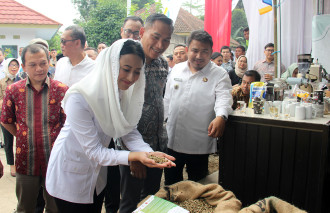
PT KBI Strengthens Priority Social and Environmental Responsibility (TJSL) Programs
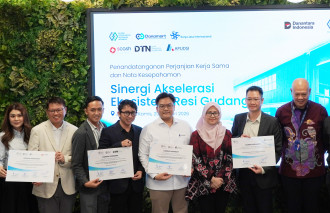
KBI Strengthens Warehouse Receipt Ecosystem
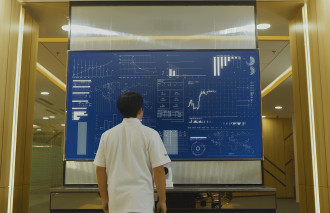
PT KBI Makes History: The Only State-Owned Enterprise Appointed by Bank Indonesia as a PUVA Clearing Institution
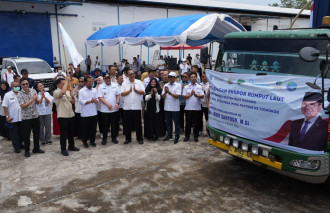
Release of 75 Tons of Seaweed Exports to China and Spain
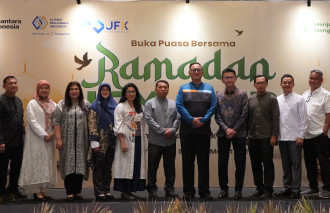
Ramadan with JFX - KBI - Regulator: Maintaining Trust, Channeling Blessings
To Promote Food Self-Sufficiency, KBI Strengthens SRG
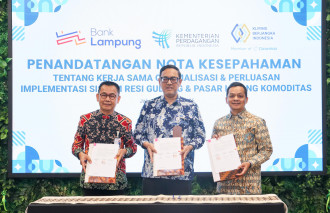
Signing of MoU between BAPPEBTI, KBI, and Lampung Regional Development Bank
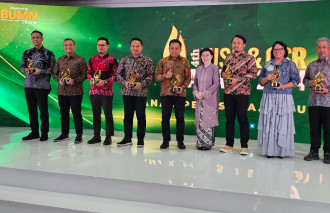
KBI Wins Gold Medal in the 2024 TJSL & CSR Award
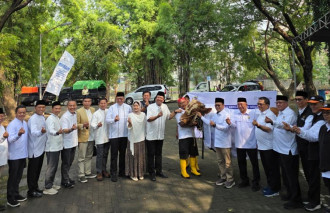
"Qurbani Berkah Berdayakan Desa"

PT KBI strengthen its commitment to developing superior human resources
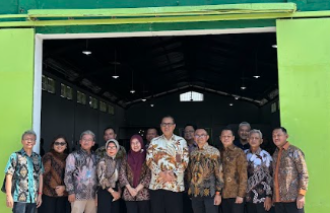
Soft launch of the rail-based SRG implementation

The SRG is a system that regulates the issuance

The Warehouse Receipt System (SRG) is often viewed as a means of storing commodities to achieve more optimal economic be

Commodity management has evolved beyond manual processes amid growing trade and logistics digitalization.
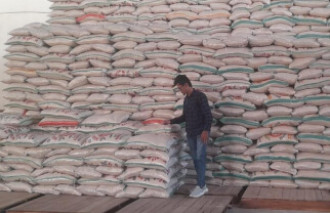
One of the key benefits of warehouse receipts is helping to maintain commodity price stability.

SRG, PFK, and PBK are actually interconnected, forming a more efficient and integrated commodity trading ecosystem.
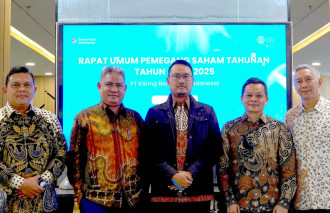
PT KBI achieved positive performances in 2025
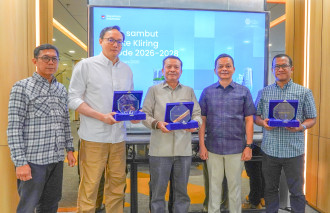
PT KBI Introduces New Clearing Committee for 2026–2028

Commodity Futures Trading (PBK) is the activity of buying and selling futures contracts for specific commodities.

The terms "multilateral" and "bilateral" refer to the mechanisms for executing transactions.
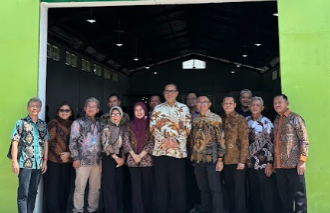
Futures trading involves not only sellers and buyers but is also supported by several institutions.
Commodity Futures Trading in Indonesia involves three main institutions.

An institution authorized to formulate, establish, and oversee operational rules within the market environment.

The primary instrument of commodity futures trading is the futures contract an agreement to buy or sell a commodity The

Understanding basic trading terms is crucial when entering the trading market.

The systems used for the supervision and management of market participant data are SITNa and SKD.

Every transaction of buying and selling futures contracts is not carried out directly between the buyer and seller

Learning Commodity Trading for Beginners: Want to Start Trading Commodities? Read This First to Avoid Losses
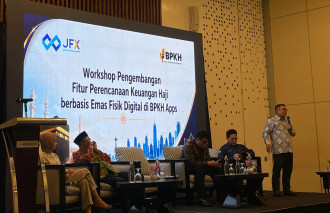
The event aimed to discuss the concepts, business models, sharia aspects, and operational mechanisms
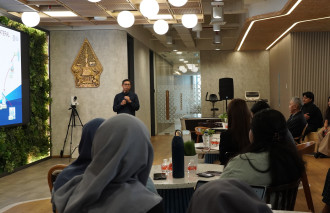
From layman to understanding about trading mechanisms
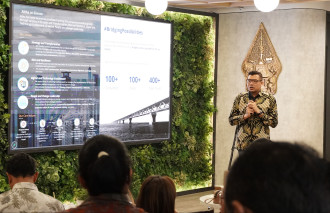
Table Top Business Continuity Management (BCM) Simulation
Pioneer of the SRG Registration Center
PT KBI supports the action taken by Bappebti in suspending the business activities of PT QMI
JFX dan PT KBI memanggil Direksi, Dewan Komisaris dan Pemegang Saham PT QMI untuk penyelesaian klaim pelanggan
penyelesaian klaim Pelanggan PT Quantum Metal Indonesia oleh tim Satgas

Officially announced transformation into Persero