
 Kembali
IKUTI KAMI



 22 Jan 2026

The Warehouse Receipt System (SRG) is often viewed simply as a means of storing commodities to achieve optimal economic benefits. However, underlying the processes of issuing and utilizing warehouse receipts are institutions that ensure the system operates securely and with legal certainty. Each institution within the SRG performs a distinct function, ranging from supervision, commodity storage, and transaction recording to financing.
The government, through the Ministry of Trade, acts as the regulator responsible for establishing policies, regulations, and the strategic direction for the development of the SRG in Indonesia. It also determines the types of commodities eligible for the system, warehouse requirements, and applicable operational mechanisms. These regulations aim to establish legal certainty while maintaining the confidence of all parties involved in the system (Ministry of Trade of the Republic of Indonesia, 2025).
The next entity is the Warehouse Operator. The warehouse operator plays a primary role in receiving, storing, safeguarding, and releasing the commodities entrusted to them by the goods' owners. Prior to the issuance of a warehouse receipt, the operator is responsible for ensuring that the quantity and condition of the commodities meet established standards. Consequently, warehouses utilized within the Warehouse Receipt System (SRG) must satisfy specific technical and administrative requirements to ensure the quality of the commodities is maintained throughout the storage period.
In addition to the warehouse operator, there is the Quality Testing Conformity Assessment Body, which is responsible for testing and verifying commodity quality. This body ensures that the stored goods meet applicable quality standards. The results of this assessment serve as a crucial basis for the warehouse receipt issuance process, as the economic value of a commodity is heavily influenced by its quality and specifications (BAPPEBTI, 2024).
Another institution playing a central role is the Warehouse Receipt Registration Center. This institution is tasked with recording, administering, and monitoring the issuance of warehouse receipts. Through a centralized registration system, the ownership status of each warehouse receipt can be tracked, thereby minimizing the risk of document duplication or transaction misuse.
In Indonesia, this function is performed by PT Kliring Berjangka Indonesia, the institution appointed to manage warehouse receipt registration (PT Kliring Berjangka Indonesia, 2025).
Regarding financing, financial institutions such as banks and non-bank financial institutions play a role by accepting warehouse receipts as loan collateral. Through this mechanism, farmers and business operators can obtain working capital without
having to sell their commodities when market prices are low. This scheme represents a key value-added aspect of the Warehouse Receipt System (SRG) implementation, as it helps improve access to financing for the real sector.
Furthermore, goods owners and business operators are also vital components of the SRG ecosystem.
Commodity owners are responsible for ensuring that stored goods meet requirements and for utilizing warehouse receipts appropriately according to business needs. Without the active participation of business operators, the economic benefits expected from this system cannot be fully realized. Ultimately, the success of the SRG does not depend on a single institution
but rather on the collaboration of all involved parties. The government (as regulator), warehouse operators (providing storage and goods supervision), assessment bodies (ensuring quality), the registration center (managing data), and financing institutions (facilitating access to capital) collectively form an interconnected ecosystem.
This interconnected ecosystem is, in fact, just the beginning. If regulators, warehouse operators, assessment bodies, registration centers, and financing institutions can achieve greater integration with futures exchanges and capital markets, warehouse receipts have the potential to evolve from mere credit collateral instruments into the foundation of a National Commodity Hub that comprehensively bridges the real and financial sectors. At that point, the Warehouse Receipt System (SRG) would no longer merely assist farmers during peak harvests but would also help propel Indonesia to become a global center for commodity trading and price formation.



PT Kliring Berjangka Indonesia (PT KBI) is establishing itself as part of the country's economic growth agent

PT Kliring Berjangka Indonesia (PT KBI) has started a new step in implementing the CSR program

PT Kliring Berjangka Indonesia (PT KBI) has held an inauguration for their new office at Menara Danareksa
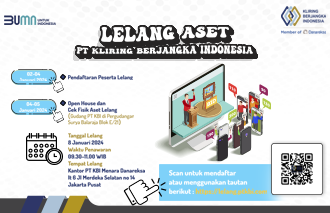
Asset Auction
Asset Auction
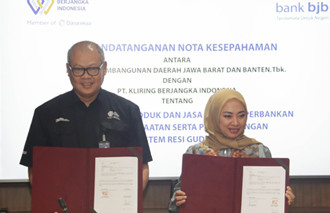
Langkah Strategis PT KBI dan Bank BJB untuk perkuat Sistem Resi Gudang Indonesia
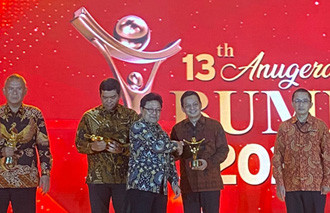
KBI Achieve the "Best Corporate in Establishing The AKHLAK Implementation Index" Award at the 2024 BUMN Awards

KBI Ramadan Media Gathering Moving into Action for Better

KBI participated in organizing Mudik Asyik Bersama BUMN in 2024

PT KBI and JFX held a Halal Bihalal event with futures trading industry
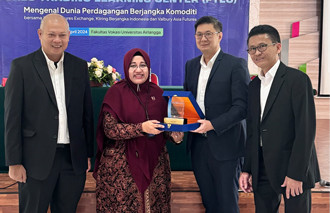
Universitas Airlangga FTLC Program with PT Valbury, JFX and KBI

KBI Cooperates with BRI (BBRI) as Margin Fund Depository Bank
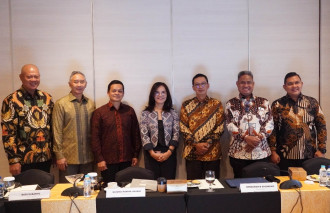
PT Kliring Berjangka Indonesia Achieves idAA Stable Outlook Rating On Operational Performance in 2023

PT KBI Wins Gold Award in Economic Pillar Category at TJSL & CSR Award 2024

PT KBI wins the 5th Anniversary Indonesia Popular Reputation Awards 2024

Supporting the government's Food Security program, PT KBI and PT JIEP developed a Warehouse Receipt System.
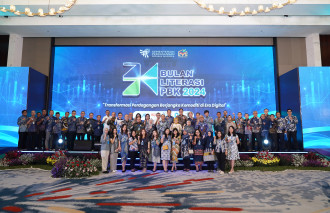
PT KBI supports PBK Literacy Month, focusing on digital transformation and strengthening synergy in the commodity future
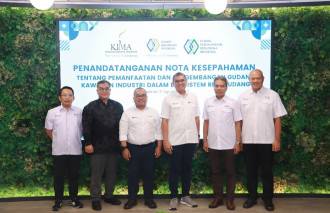
PT KBI and PT KIMA collaborate to develop industrial area warehouse as a strategic step to strengthen the company

PT KBI strengthens Indonesia's food security by developing a Commodity Trading Ecosystem through synergy and system tran
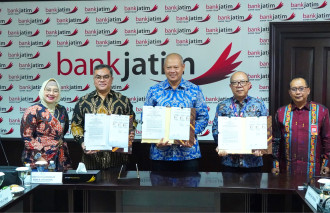
Collaboration between PT KBI, PT KPBI, and Bank Jatim Develops Warehouse Receipt
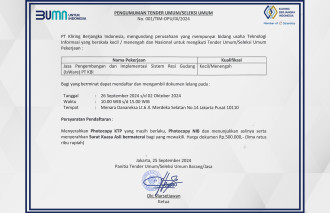
PT Kliring Berjangka Indonesia Mengadakan Tender Umum

PT KBI Holds KBI 5th ESport Championship Again

KBI's Role in Futures Trading Ecosystem
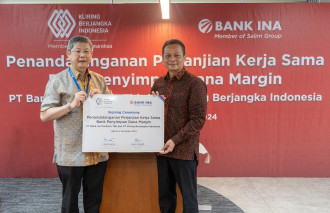
PT KBI Collaborates with Bank INA as BPDM
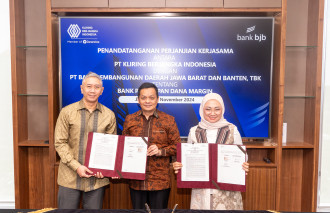
PT KBI Partners with Bank BJB to Strengthen Commodity Trading Ecosystem
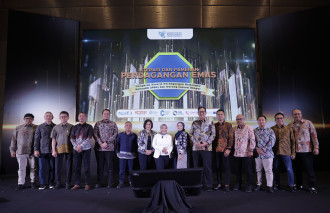
PT KBI is Optimist to Strengthen Physical Digital Gold Trading in 2025
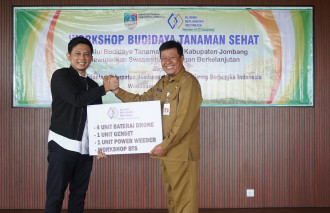
PT KBI Strengthens National Food Security Program Through Optimization of Rice Barns in Jombang, East Java
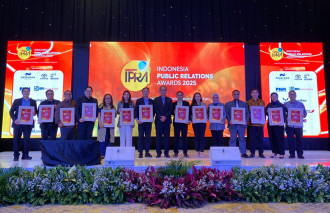
PT KBI wins prestigious award for Best Public Relations in the Financial Services category

PT KBI once again received a prestigious award in digital innovation at the 6th Indonesia Top Digital Innovation Award

In the spirit of the holy month of Ramadan, PT KBI encourages spreading kindness through Ramadan Bergerak campaign
KBI recorded a surge in strategic commodity transaction volumes amid geopolitical and economic uncertainty.
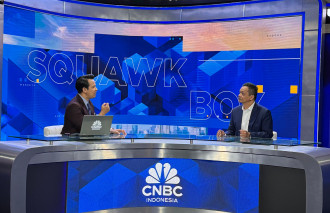
Global economic uncertainty caused by geopolitical tensions and trade wars has led to a shift in investment to gold, whi

It is not just about cultivating commodities, but this issue has deep links to issues of sustainability
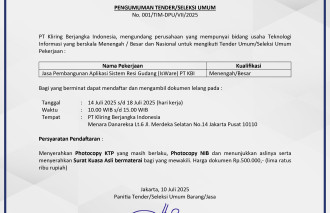
Pengumuman Tender Umum/Seleksi Umum Untuk Perusahaan IT
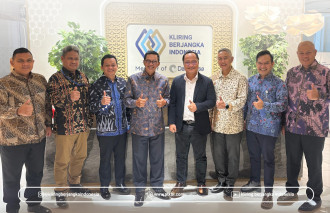
A country with vast agribusiness and logistics potential, Indonesia requires a transparent & reliable warehouse system
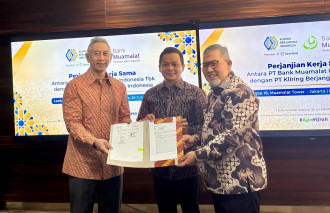
Bank Muamalat collaborates with KBI in the use of banking services for transaction settlement
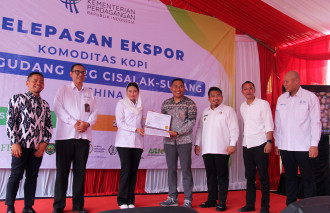
PT KBI as the only Warehouse Receipt Registration Center in Indonesia

PT KBI Received the 50 Popular PR Person Award of 2025 at The Iconomics event
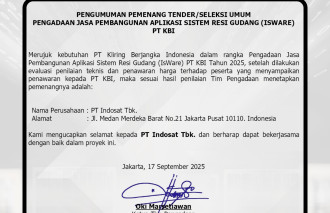
Pengumuman pemenang tender umum pengadaan jasa pembangunan aplikasi sistem resi gudang (ISWARE) PT KBI
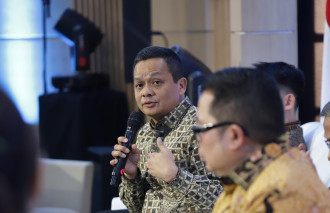
The Golden Generation with CFTC Skills: Understand Risks and Opportunities
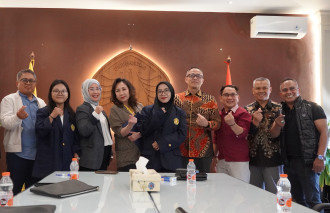
Scholarship program for undergraduate students
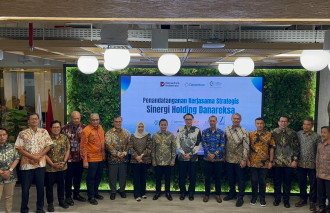
Realizing Industrial Estate Warehouse Integration and Warehouse Receipt
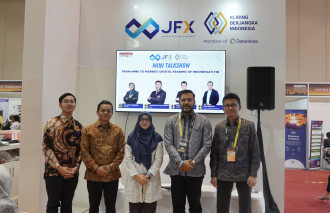
Strengthening Governance and Competitiveness of Commodity Trade
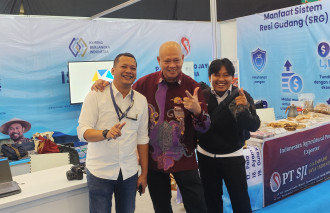
Warehouse Receipt Ecosystem Synergy at Trade Expo Indonesia 2025
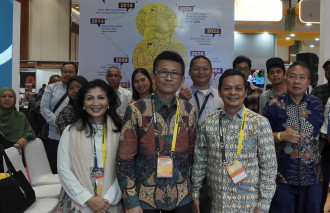
JFX and KBI Synergy in Commodity Trading Mining
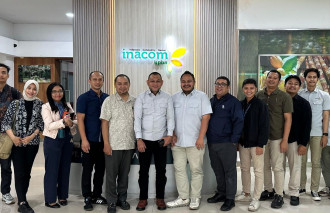
PT KBI Promotes Auction of 20 Tons of Coffee Runs Successfully

KBI Expands Role until US Stock Exchanges
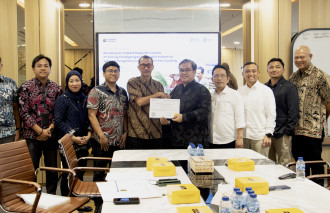
PT KPBI is granted liscense as Warehouse Manager by BAPPEBTI
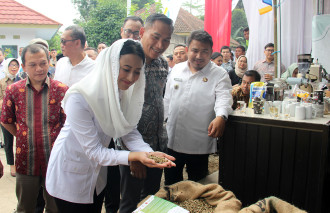
PT KBI Strengthens Priority Social and Environmental Responsibility (TJSL) Programs
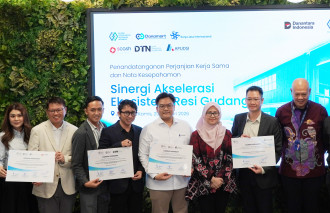
KBI Strengthens Warehouse Receipt Ecosystem
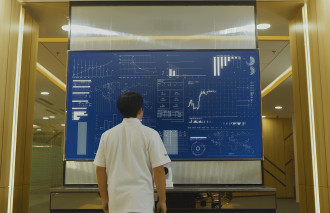
PT KBI Makes History: The Only State-Owned Enterprise Appointed by Bank Indonesia as a PUVA Clearing Institution

From Village to Stock Exchange: Time to Democratize Capital
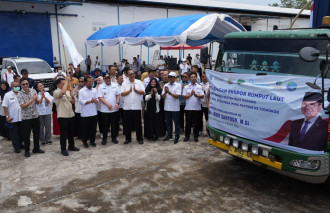
Release of 75 Tons of Seaweed Exports to China and Spain
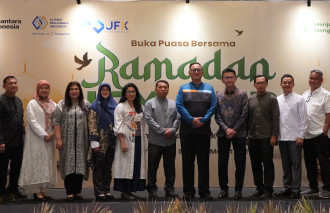
Ramadan with JFX - KBI - Regulator: Maintaining Trust, Channeling Blessings
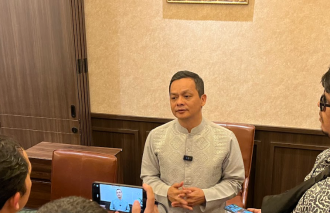
To Promote Food Self-Sufficiency, KBI Strengthens SRG
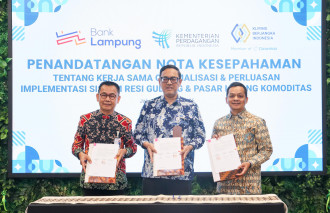
Signing of MoU between BAPPEBTI, KBI, and Lampung Regional Development Bank

KBI Wins Gold Medal in the 2024 TJSL & CSR Award
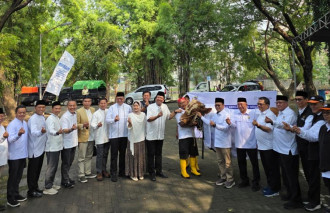
"Qurbani Berkah Berdayakan Desa"

PT KBI strengthen its commitment to developing superior human resources
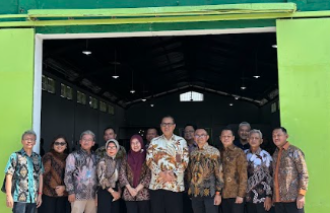
Soft launch of the rail-based SRG implementation

The SRG is a system that regulates the issuance

Commodity management has evolved beyond manual processes amid growing trade and logistics digitalization.
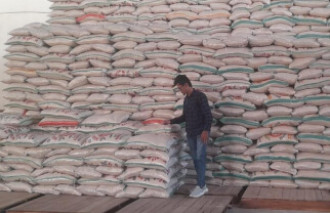
One of the key benefits of warehouse receipts is helping to maintain commodity price stability.

SRG, PFK, and PBK are actually interconnected, forming a more efficient and integrated commodity trading ecosystem.
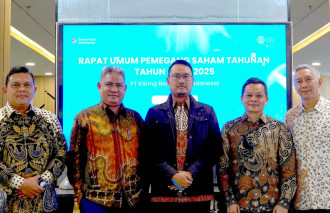
PT KBI achieved positive performances in 2025
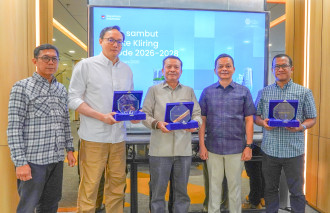
PT KBI Introduces New Clearing Committee for 2026–2028

Commodity Futures Trading (PBK) is the activity of buying and selling futures contracts for specific commodities.

The terms "multilateral" and "bilateral" refer to the mechanisms for executing transactions.
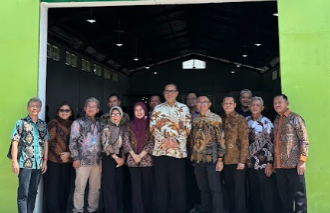
Futures trading involves not only sellers and buyers but is also supported by several institutions.

Commodity Futures Trading in Indonesia involves three main institutions.

An institution authorized to formulate, establish, and oversee operational rules within the market environment.

The primary instrument of commodity futures trading is the futures contract an agreement to buy or sell a commodity The

Understanding basic trading terms is crucial when entering the trading market.

The systems used for the supervision and management of market participant data are SITNa and SKD.

Every transaction of buying and selling futures contracts is not carried out directly between the buyer and seller

Learning Commodity Trading for Beginners: Want to Start Trading Commodities? Read This First to Avoid Losses
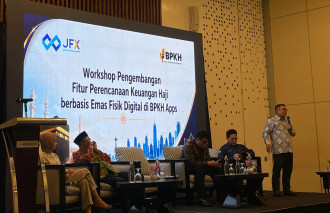
The event aimed to discuss the concepts, business models, sharia aspects, and operational mechanisms

From layman to understanding about trading mechanisms
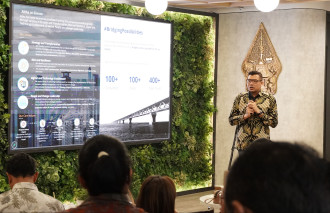
Table Top Business Continuity Management (BCM) Simulation
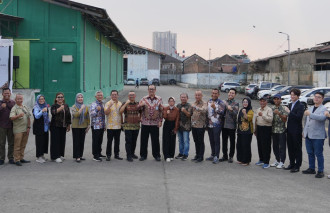
Pioneer of the SRG Registration Center
PT KBI supports the action taken by Bappebti in suspending the business activities of PT QMI
JFX dan PT KBI memanggil Direksi, Dewan Komisaris dan Pemegang Saham PT QMI untuk penyelesaian klaim pelanggan
penyelesaian klaim Pelanggan PT Quantum Metal Indonesia oleh tim Satgas

Officially announced transformation into Persero